


A chain binder tightens transport chain so cargo stays secured on a trailer. To use one safely, check that the chain and binder match, attach them at sound points, tighten the chain, then inspect the full setup before you roll.
We analyzed 53 YouTube comments about chain binders and found that 45% mentioned chain slack and hooking issues.
Here’s our step-by-step process at Elohim USA. Take your time with the fit and the final checks. A binder that feels tight still needs a close look.
Step 1: Check your chain and binder
Start with clean, undamaged gear. Look for cracks, bent parts, heavy wear, or links that don’t move as they should. Check the working load limit (WLL) on the chain and binder, and confirm the binder is made for that chain size.
Elohim USA carries chain binders in several chain sizes. Match the binder and chain by their markings, not by how close they look.

By now, you should have sound gear that matches by size and rating.
Step 2: Plan the chain path
Choose a trailer anchor point that can take the pull, then plan where the chain will cross the load. Use a sound part of the cargo’s frame when possible. Keep the chain away from weak edges that could bend or break under tension.
Check that the chain reaches without forcing a poor angle. A chain that barely reaches may not let the binder sit in a stable position. Browse Transport Chains & Hardware for Flatbed Trucking when you need to match chain gear for a setup.
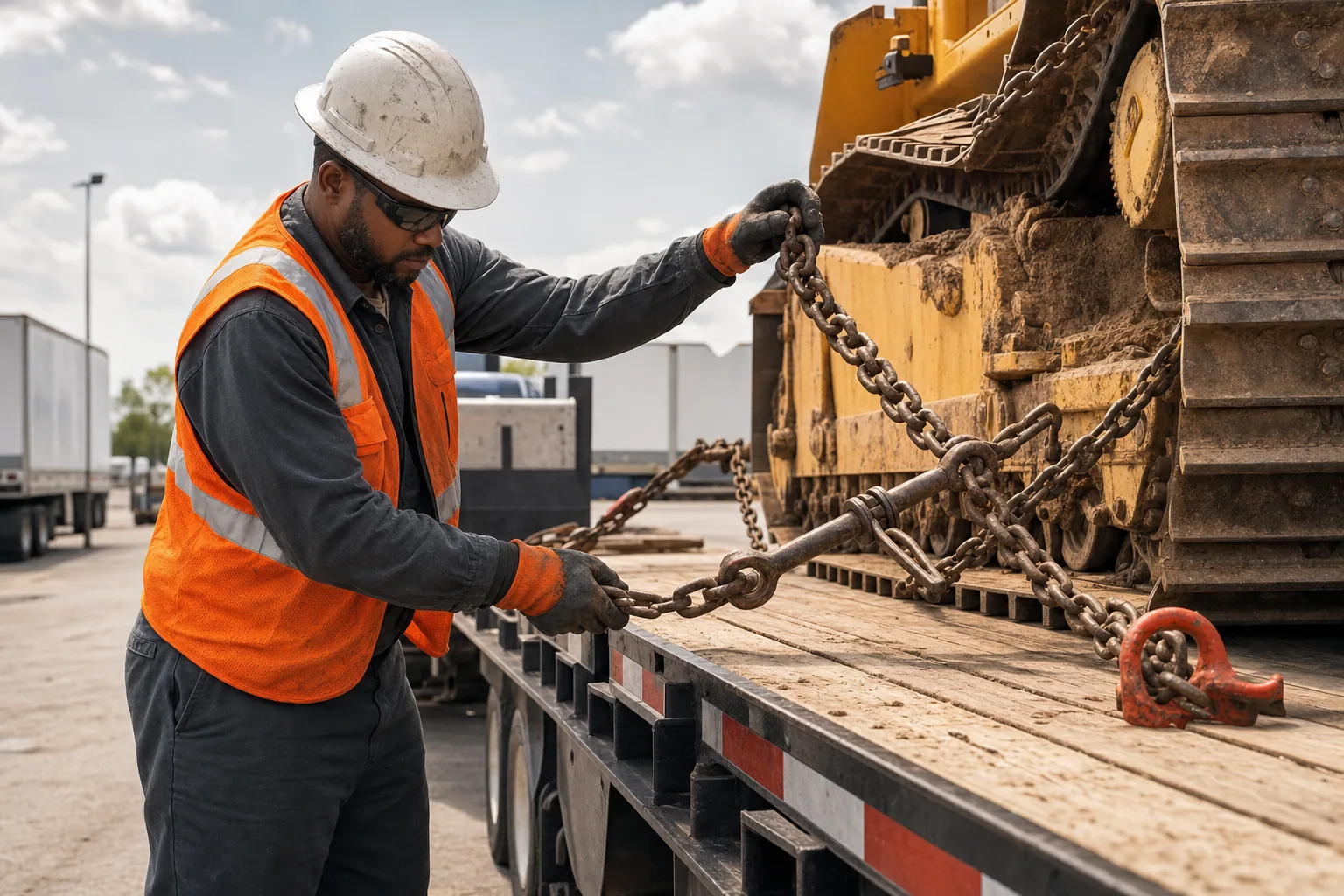
Before moving on, make sure the path avoids fragile cargo parts and sharp edges.
Step 3: Place the chain over the load
Hook one end of the chain to the trailer’s anchor point. Bring the chain over or through the cargo as your load and securement plan requires, then connect the other end at the opposite anchor point.
Keep the chain seated where it can hold without crushing or cutting into the cargo. If the chain is slack, take up some by hand before you fit the binder. You’ll have a cleaner, more stable setup to tighten.
The chain should now sit in the planned path, with both ends connected.
Step 4: Open and attach the binder
Extend the binder enough to reach the chain links at both ends. Hook one binder end near the cargo, then attach the other end to the chain near the anchor point. Choose links that let the binder sit straight without twisting.
Elohim USA’s 3/8"-1/2" Transport Kit with four ratchet binders and four chains pairs these parts for a compatible setup. Confirm the chain size and WLL suit your load before use.
Check that both hooks are fully seated. The binder should line up with the chain, not pull sideways.
Step 5: Tighten the chain
Operate the binder according to its design. For a ratchet binder, work the handle through its ratcheting motion. For a lever binder, use controlled force and keep your body clear of the handle’s path.
Tighten until the chain has no loose slack and the load is held in place. Don’t add a pipe or other extension to the handle. Extra force can make the binder hard to control and can overload the securement gear.
Stop when the chain is snug and the binder is seated as intended. Tight isn’t a substitute for checking the WLL.
Step 6: Fix chain slack
If the chain still feels loose after tightening, don’t keep forcing the handle. Release tension in a controlled way, move the binder attachment by one or two links, then tighten again. A small change in link position can remove slack without an improvised extension.
For fleet buyers who need repeatable equipment orders, Elohim USA ships nationwide and provides bulk discounts and custom quotes. Our team can help you review chain and binder options through Rigging & Lifting Equipment.
Recheck the chain after adjusting. It should be taut without the binder sitting at an awkward angle.
Step 7: Secure excess chain
Wrap or secure extra chain so it can’t swing into the load or drag on the trailer. Keep it clear of moving parts and avoid leaving loose links where they could catch during travel.
Look along the full chain path. Check that the hooks remain seated and that the binder handle is in its intended closed or secured position. Don’t use an improvised tie-off that could come loose on the road.
The chain should now be tidy, with no loose end that can strike the cargo.
Step 8: Check securement before travel
Walk around the load and check every tie-down. Confirm that the chain and binder are seated, the load hasn’t shifted, and no part of the setup can contact the cargo in a damaging way. Recheck after you make any adjustment.
Apply the cargo securement rules that fit your load and route; don’t rely on a binder count alone to confirm compliance.
Only head out once the whole securement arrangement checks out.
Chain Binder FAQ
What does a chain binder do?
A chain binder tightens transport chain used to secure cargo for travel. Its hooks connect to chain links, and its handle creates tension. The chain, binder, anchor points, and load must work together as a securement system, so check their size and WLL before loading.
How tight should a chain binder be?
Tighten until the chain has no loose slack and the load is held in place, then inspect the full setup. Don’t use added pipe or uncontrolled force to tighten further. Follow the binder’s instructions and the cargo securement rules that apply to your load.
What should I do if the chain still feels loose?
Release tension safely, reposition the binder attachment by one or two links, and retighten. Check that the binder is straight and the chain is routed correctly. If you still can’t remove slack without forcing the handle, reassess the chain length or anchor-point placement.
Can I use any binder with any transport chain?
No. The binder must fit the chain size, and both must have suitable working load limits for the securement plan. Check the markings on each item before use. Elohim USA’s 5/16"-3/8" Transport Kit is one example of a kit that pairs binders with matching chain sizes.
Conclusion
Use a matching chain and binder, tighten with control, and inspect the full securement before travel. If you want to review binder options for your rig or fleet, start with Elohim USA’s chain binder collection and request a custom quote for bulk orders.


